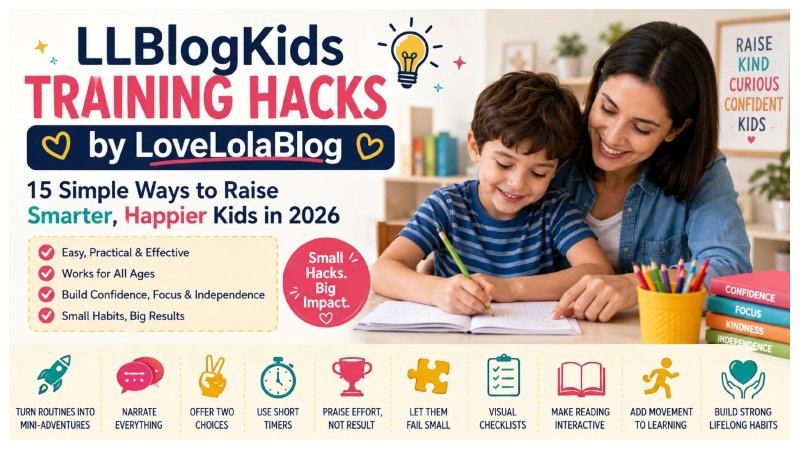
Raising a confident, capable child doesn’t require expensive programs or a teaching degree. It requires small, consistent habits that turn ordinary moments—bath time, breakfast, the walk to school—into opportunities for growth. That’s the core idea behind llblogkids training hacks by lovelolablog: a practical, no-fluff approach to child development that busy parents can actually stick to.
This guide breaks down what these training hacks really mean, why they work, and exactly how to use them at home—whether your child is a toddler learning to talk or a grade-schooler learning to focus.
What Are “Training Hacks” for Kids?
“Training” in this context has nothing to do with strict discipline or rote memorization. It simply means guiding a child’s habits, behavior, and skills through repetition, gentle structure, and play. A training hack is a small, low-effort tweak — like narrating your actions out loud or letting your child choose between two snacks — that quietly builds a bigger skill over time, such as language, patience, or decision-making.
The appeal is obvious: parents don’t have extra hours in the day, but they do have dozens of everyday moments that can be turned into micro-lessons without adding a single item to the to-do list.
Why This Approach Works Better Than Rigid Schedules
Traditional parenting advice often leans on strict routines and formal lesson plans. The problem is that children resist rigidity, and parents burn out trying to enforce it. A more flexible, play-based model respects how kids actually learn — through curiosity, repetition, and emotional connection — while still giving parents a sense of structure and progress.
Three principles make this method effective:
- Match the method to the child. Some children absorb information through pictures and stories, others through movement, sound, or hands-on building. Watching how your child naturally plays tells you more about their learning style than any quiz.
- Doing beats watching. Children retain far more from active problem-solving than from passive listening or screen time. A five-minute hands-on activity often teaches more than a twenty-minute video.
- Small and consistent wins over big and occasional ones. A two-minute habit repeated daily builds a stronger skill than an elaborate weekend activity done once a month.
15 Practical Training Hacks You Can Start Today
1. Turn Routines Into Mini-Adventures
Instead of announcing “time to clean up,” frame it as a mission: “Let’s see how fast we can rescue all the toys before the timer buzzes!” Framing chores as games reduces resistance and builds cooperation naturally.
2. Narrate Everything
Describe what you’re doing as you do it—cooking, folding laundry, driving. This constant exposure to language is one of the simplest ways to expand a young child’s vocabulary without flashcards.
3. Offer Two Choices, Not Open-Ended Ones
“Do you want the red cup or the blue cup?” gives a toddler a sense of control while keeping the outcome manageable for you. This small hack cuts down on power struggles significantly.
4. Use the One-Task Timer Method
Set a short timer (5–10 minutes) for one task at a time, with a short break after. This builds attention span gradually and works well for both toddlers and school-age kids struggling with focus.
5. Praise the Effort, Not Just the Result
Saying “You worked really hard on that” instead of “You’re so smart” teaches kids that effort — not innate talent — drives success. This is one of the most research-supported habits for building a growth mindset.
6. Let Them Fail Small
Allowing a child to struggle with a zipper or a puzzle piece (within reason) before stepping in builds problem-solving resilience. Rescuing too quickly teaches helplessness instead of persistence.
7. Use Visual Checklists
A simple picture-based checklist for morning or bedtime routines lets younger children track their own progress, which reduces nagging and builds independence.
8. Make Reading Interactive, Not Passive
Instead of just reading the words, pause at each page: “What do you think happens next?” or “Why do you think she looks upset?” This turns story time into a comprehension and empathy exercise, not just word recognition.
9. Add Movement to Learning
Counting while jumping, spelling while hopping, or acting out a story physically activates more of the brain than sitting still ever will. Multisensory learning sticks longer.
10. Create a “Yes Space”
Designate one area of the house—a shelf, a bin, a corner—where a child can explore freely without hearing “don’t touch.” This reduces daily friction and encourages independent exploration.
11. Use Natural Consequences Over Punishment
If a toy is left outside and gets rained on, let that be the lesson rather than a lecture. Natural outcomes teach responsibility more effectively than imposed punishments.
12. Build a Weekly Reflection Habit
Even five minutes at the end of the week—”What was your favorite thing that happened?” “What was hard?” builds emotional vocabulary and self-awareness in kids as young as four.
13. Explain the “Why” Behind Rules
“We hold hands in the parking lot because cars can’t always see small kids” gets far more genuine cooperation than a flat “because I said so.” Children are more likely to internalize rules they understand.
14. Use Gamification for Repetitive Tasks
Simple point systems, sticker charts, or friendly challenges can make brushing teeth or practicing spelling words feel like a game rather than a chore.
15. Protect Calm-Down Time Before Problem-Solving
When a child is upset, skip the lesson until they’re calm. Pause, acknowledge the feeling (“I can see you’re frustrated”), and only address the behavior once the emotional storm has passed.
Age Matters: Adjusting the Hacks
- Toddlers (1–3 years): Focus on choices, narration, and sensory play. Keep instructions to one step at a time.
- Preschoolers (3–5 years): Introduce simple checklists, storytelling questions, and short timers.
- School-age kids (6+ years): Add reflection habits, natural consequences, and effort-based praise tied to schoolwork and responsibilities.
Common Mistakes Parents Make
Even well-intentioned parents can undercut these hacks by:
- Over-explaining. Long lectures lose a child’s attention fast—keep explanations short and concrete.
- Inconsistency. A hack used once a week won’t build a habit; small and frequent beats big and rare.
- Comparing children. Every child’s pace is different — a system that works for one sibling may need adjusting for another.
- Rescuing too soon. Stepping in at the first sign of struggle removes the learning opportunity the struggle was creating.
Final Thoughts
None of these training hacks require special equipment, formal training, or a rigid schedule. They work because they fit into life as it already happens—during breakfast, in the car, at bath time — turning ordinary parenting moments into building blocks for confidence, focus, and independence. Start with just one or two hacks that feel natural for your family, stay consistent for a few weeks, and adjust as you learn what your child responds to best. Small, steady changes, repeated often, are what actually shape lasting habits in children.