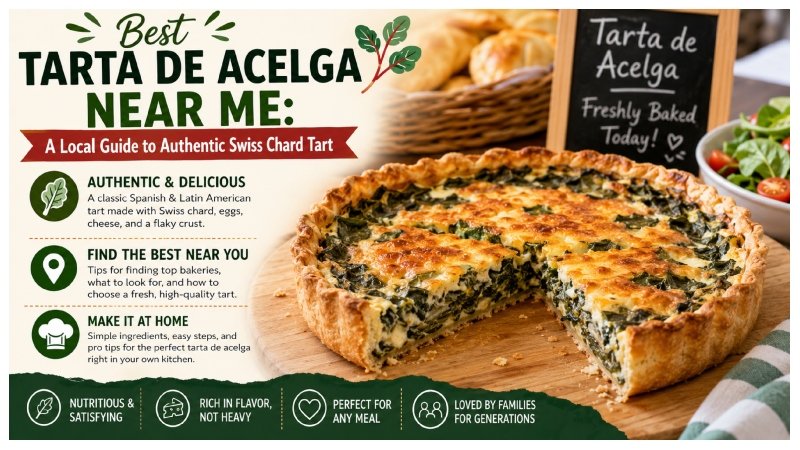
Craving the best tarta de acelga near me? You are searching for one of the most comforting savory pies in Argentine and Spanish cuisine. This tart blends tender Swiss chard, eggs, and cheese inside a flaky crust. It shows up on family tables, at bakeries, and at casual lunch spots across many cities. This guide walks you through the dish’s roots, what separates an average tart from a great one, and how to track down the best tarta de acelga near me today.
The Origins of Tarta de Acelga
Tarta de acelga has deep roots in Spanish home cooking, brought to Argentina and Uruguay by Spanish and Italian immigrants in the early 20th century. Families adapted the recipe using local ingredients, turning it into a staple comfort food. Today, it appears in bakeries, cafés, and home kitchens throughout South America and parts of the United States with strong Latin American communities.
The dish reflects a broader tradition of savory tarts found across Mediterranean cooking. Spinach, zucchini, and pumpkin versions exist too, but chard remains the most traditional filling.
Nutritional Value of Swiss Chard Tart
Swiss chard is packed with vitamin K, vitamin A, and magnesium. It also contains fiber, which supports digestion. When combined with eggs and cheese, the tart becomes a good source of protein and calcium.
A single slice offers a balanced mix of vegetables, protein, and carbohydrates from the crust. This makes tarta de acelga a filling option for lunch, rather than just a side dish. Many people pair it with a simple salad for a complete meal.
Regional Variations Worth Knowing
Not every tarta de acelga tastes the same. In Argentina, bakers often add ricotta for a creamier texture. In Spain, some regions use béchamel sauce instead of ricotta, giving the filling a smoother finish. Uruguayan versions sometimes include a touch of bacon or ham for extra richness.
Knowing these variations helps you choose a style that fits your taste. If you prefer a lighter tart, look for versions without added meat or heavy sauce.
What Sets the Best Tarta de Acelga Apart
Several details separate an excellent tart from an average one. Fresh chard is essential, since older leaves turn bitter after baking. A properly blind-baked crust also matters, since it prevents a soggy bottom.
Seasoning plays a major role too. Skilled bakers balance nutmeg, garlic, and black pepper without letting any single flavor dominate. The cheese-to-chard ratio should feel even, not overly heavy on one side.
How to Find the Best Tarta de Acelga Near Me
Start with a simple map search using your city name. Google Maps reviews often reveal which bakeries bake fresh batches daily. Look for comments mentioning a crisp crust and fresh greens, since these details signal quality.
Local Latin American grocery stores are another reliable source. Many prepare tarts each morning and sell them whole or by the slice. Calling ahead to confirm same-day baking can save you from a stale purchase.
Social media also helps. Community food groups on Facebook or Instagram often highlight small bakeries that do not rank high in standard search results but offer excellent quality.
Tips for Ordering or Making It Yourself
If ordering, ask whether the bakery uses fresh or frozen chard. Fresh chard always produces better flavor and texture. If baking at home, blanch the chard briefly before mixing it into the filling. This step removes excess moisture and prevents a watery tart.
Store leftovers in the refrigerator and reheat in the oven, not the microwave, to keep the crust crisp.
Conclusion
Finding the best tarta de acelga near me takes a little effort, but the reward is worth it. Look for fresh chard, a crisp crust, and balanced seasoning, whether you buy from a trusted local bakery or make it at home. Understanding the dish’s history and regional variations also helps you appreciate every bite a little more.
Frequently Asked Questions
1. What makes the best tarta de acelga near me stand out from others? A great tart uses fresh chard, a crisp crust, and balanced seasoning without excess moisture.
2. Is tarta de acelga served hot or cold? It can be served either way, though many people prefer it warm for the best texture and flavor.
3. Can I substitute spinach for chard in this recipe? Yes, spinach works as a substitute, though it produces a milder flavor than traditional chard.
4. How long does tarta de acelga stay fresh? It stays fresh for about three days when refrigerated properly in an airtight container.